Whatever we measure — what a disease does to cells, what a drug does to cells — it lands in the same place: transcriptomic data. The disease and the drug become directly comparable.
No single gene tells the entire story. The whole pattern is the cell's fingerprint — every cell type has its own, and any cell, healthy or diseased, can be read the same way and compared.
Sometimes a single broken gene; more often a coordinated shift across thousands — in specific cell types, in a pattern unique to that disease.
Not just on its intended target. Every gene the compound changes — profiled with DRUG-seq, in disease-relevant cells.
Patient-derived tissue profiled with scRNA-seq, across the full transcriptome — the signature of each condition.
Disease understanding tells us which compounds are worth testing — then DRUG-seq measures the full transcriptomic effect of each, in the cell types where the disease manifests.
Machine-learning models that find reversal candidates — and search billions of synthesizable compounds for new ones.
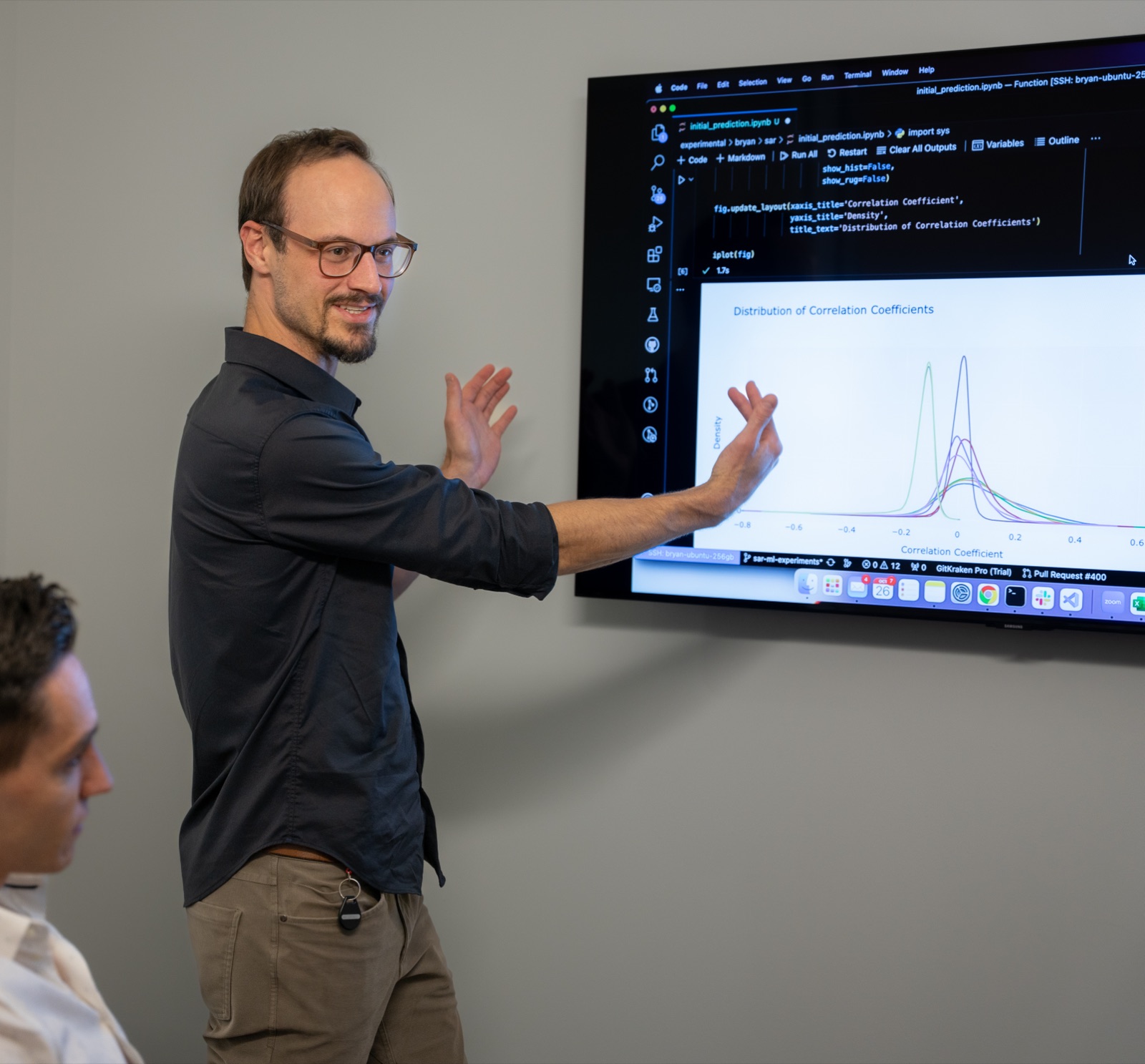
Chemists, biologists, and machine-learning researchers rarely work this close together. At Transcripta they do — because matching a drug to a disease signature only works when all three are in the same room.

Conditions where decades of drug development have come up short: neurodevelopmental, neurodegenerative, and rare muscular diseases. Each shares complex transcriptomic dysregulation that traditional approaches can't address.
We partner with pharma, biotech, and academic teams to apply the Disease Signature and Drug-Gene atlases to new programs — and find the compounds that reverse disease.
Hundreds of gene perturbations, profiled at full transcriptomic resolution. Open to academic researchers and industry partners.